

Capital Allocation & Governance
Financing Energy Capacity Before Demand Arrives
What Should an Investor Approve When Future Demand Is Not Yet Secured?
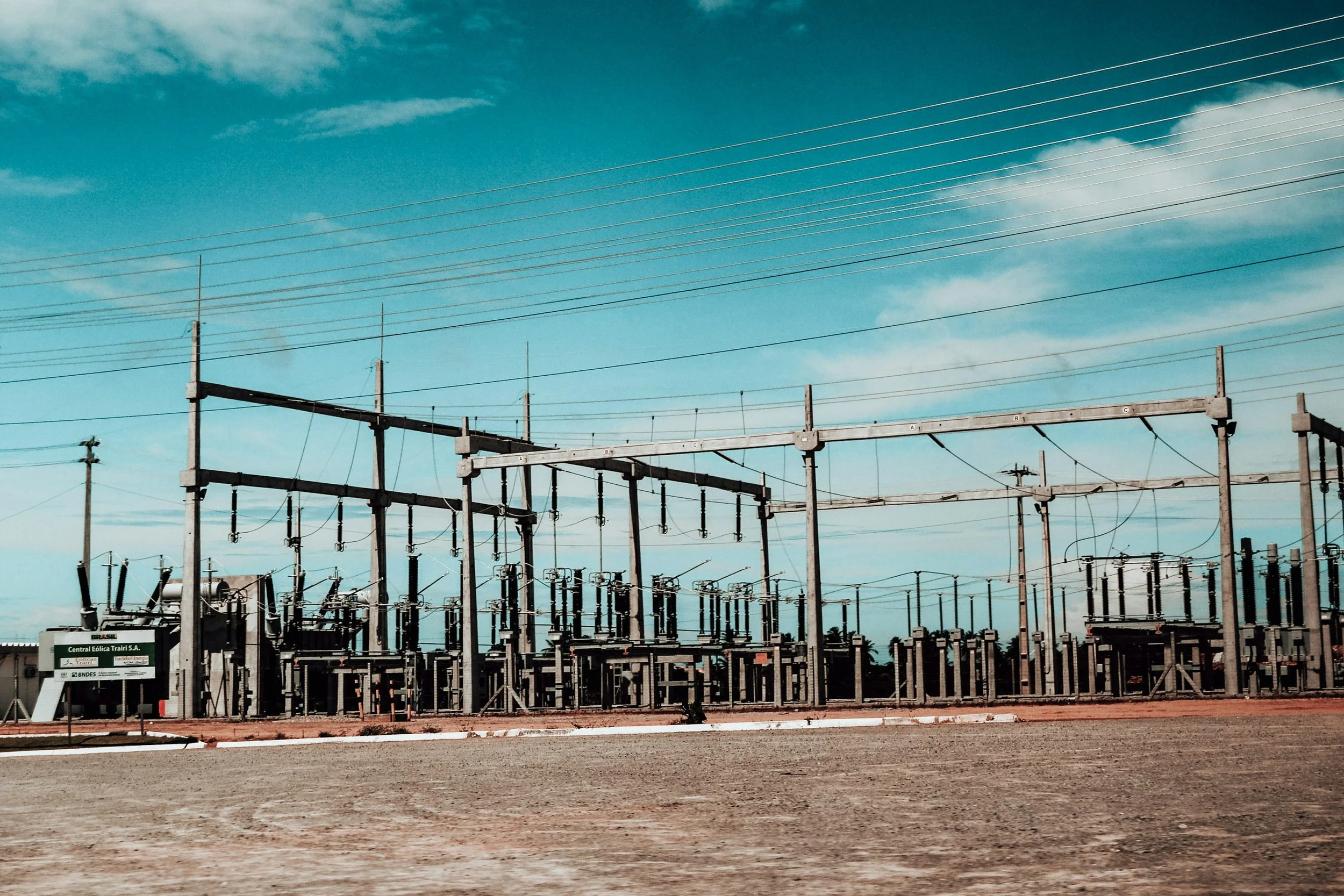
The UAE's expanding energy and industrial infrastructure creates significant investment opportunities. But when capacity must be financed before customers generate the expected revenue, the quality of the investment depends as much on the financing structure as on the demand forecast.
A sound investment case can still lead to the wrong financing decision
Consider an energy infrastructure developer preparing to invest AED 300 million in additional capacity.
The project supports an expanding industrial area. Demand forecasts are encouraging, and the technical assessment confirms that the infrastructure can be delivered.
Management expects annual customer receipts of AED 48 million once the next phase of development is operational.
There is one complication.
Only AED 35 million of those receipts is currently supported by firm contractual commitments. The remaining revenue depends on customer expansion that has not yet been secured.
The difference may appear manageable in the context of a long-term infrastructure investment.
But the consequences for financing can be substantial.
The decision facing the Board is not simply whether the expected demand justifies building the infrastructure. It is whether the proposed financial commitment remains appropriate before that demand becomes reliable revenue.
That distinction can influence the amount of capital approved, the financing terms and the conditions under which construction should proceed.
Why this matters in the UAE
The UAE is making substantial investments in electricity generation and infrastructure to support industrial development, digital capacity and artificial intelligence.
In December 2025, TAQA and Emirates Water and Electricity Company (EWEC) announced financial close on the AED 3.6 billion Al Dhafra Power Plant.
The 1 GW facility is intended to supply electricity to data centre projects in Abu Dhabi. Approximately 85% of the investment is funded through debt financing, supported by a 24-year power purchase agreement between TAQA and EWEC. TAQA and EWEC, December 2025
The agreement illustrates the importance of contractual revenue arrangements in financing major infrastructure projects. Publicly available information does not indicate that Al Dhafra faces the uncontracted revenue exposure examined in this article.
Demand expectations are also evolving.
Wood Mackenzie estimated in March 2026 that UAE data centre electricity consumption would more than double, from approximately 3 TWh in 2025 to more than 6 TWh by 2030. Wood Mackenzie, March 2026
For investors, these developments create an important distinction.
A growing market can support a compelling investment opportunity. But financing an individual project requires greater certainty about when revenue will be earned, who will pay it and which commitments are available to support the investment.
Market demand may justify developing capacity. It does not necessarily justify financing all that capacity today.
What the financial model should reveal
Return to our hypothetical AED 300 million project.
Assume annual fixed cash operating costs of AED 8 million and scheduled debt service of AED 25 million.
The original financial model anticipates AED 48 million in customer receipts.
Current contractual commitments support only AED 35 million.
The resulting difference in debt service coverage is significant.
| Annual figures | Forecast case | Contracted revenue case |
|---|---|---|
| Customer receipts | AED 48m | AED 35m |
| Fixed cash operating costs | AED 8m | AED 8m |
| Cash available for debt service | AED 40m | AED 27m |
| Annual debt service | AED 25m | AED 25m |
| Simplified debt service coverage | 1.60x | 1.08x |
Illustrative scenario. The calculation assumes contractual receipts are collected in full and excludes variable operating costs, taxes, working capital movements, reserve requirements and additional capital expenditure. Actual financing agreements may apply different definitions.
Under the forecast case, the project generates sufficient cash to cover annual debt service 1.60 times.
Under the contracted revenue case, coverage falls to 1.08 times.
Suppose the lender requires a minimum debt service coverage ratio of 1.20x.
The forecast case meets that requirement. The contracted revenue case does not.
On these simplified assumptions, approximately AED 38 million of annual receipts would be required to achieve coverage of 1.20x.
That is only AED 3 million more than the revenue currently contracted.
An investor might conclude that securing an additional AED 3 million of annual revenue solves the problem.
That conclusion would be premature.
Meeting a lender's minimum coverage requirement is not the same as demonstrating that the investment creates sufficient value for shareholders.
At exactly 1.20x, the project would have no headroom above the illustrative covenant threshold.
The investor must still consider the reliability of customer payments, future capital requirements, financing flexibility and the return generated on the full AED 300 million commitment.
This is where a financing assessment should inform the capital allocation decision rather than simply confirm whether debt can be raised.
What would change the investment decision?
The developer has several options.
It could strengthen contractual revenue commitments before proceeding. That may improve financing certainty, provided customers can support the additional obligations.
It could revise the financing structure.
With AED 27 million available for debt service, reducing annual debt payments from AED 25 million to AED 22.5 million would produce coverage of 1.20x under the simplified assumptions.
But achieving that reduction may require additional equity, a longer repayment period or another financing arrangement.
Those choices have their own financial consequences.
Alternatively, the developer could consider phasing the infrastructure investment, committing the initial capital required while preserving the option to expand as customer demand becomes more certain.
That could reduce immediate capital exposure, although it might increase future construction costs or create capacity constraints.
None of these alternatives is automatically preferable.
The correct comparison must include the financing costs, expected returns, customer commitments and value of retaining flexibility under each option.
The Board should also distinguish between measures that satisfy a lender's requirements and measures that genuinely improve the project's economics.
An example of how the recommendation could change
Based on the information available, I would not consider the original forecast sufficient, on its own, to support the unconditional release of the full AED 300 million.
That does not mean the project should be rejected.
I would first want to establish whether the additional revenue can be secured, whether the proposed financing remains sustainable under lower utilisation and what economic value might be lost by delaying construction.
Depending on those findings, a reasonable recommendation could be to authorise limited preliminary expenditure while making the release of the main construction capital conditional on further financial evidence.
That evidence might include additional enforceable customer commitments, sufficient financing headroom under downside assumptions or a revised investment sequence.
The Board would also need to see how those conditions affect the project's expected net present value and equity returns.
This is an illustration of financial judgment, not a recommendation concerning an actual project. A final investment decision would require the complete financial model, contracts, funding arrangements and relevant technical evidence.
The distinction is important.
The investment may deserve approval. But that does not mean it deserves approval on the terms originally proposed.
The risk that sits between advisers
Major infrastructure projects usually involve experienced technical, commercial, legal and financial advisers.
Each may deliver a sound assessment within its mandate.
Engineers establish whether the project can be built.
Commercial advisers assess demand and pricing.
Legal advisers review the contractual arrangements.
Lenders evaluate financing capacity and repayment risk.
Yet the Board must make a decision that extends beyond any one of these assessments.
A project may be technically feasible and commercially attractive while depending on revenue assumptions that do not provide sufficient financial resilience.
A financing structure may satisfy a lender while placing unnecessary constraints on shareholders.
And a proposed construction schedule may be achievable while committing more capital than the business can prudently support at that stage.
These differences are not necessarily failures of the individual advisers.
They reflect the fact that each assessment answers a different question.
The unresolved issue is whether their conclusions, considered together, support the investment decision.
For a Board approaching approval, this is where independent financial judgment can be particularly useful.
What should leadership know before committing capital?
A strong investment review should establish more than whether the financial model produces an acceptable return.
It should identify the assumptions on which that return depends and test what happens when those assumptions change.
It should distinguish revenues supported by enforceable commitments from those dependent on future customer activity.
It should evaluate whether the financing remains sustainable under credible downside scenarios and whether the proposed investment restricts the organisation's ability to fund other priorities.
Most importantly, it should compare the financial consequences of the available decisions.
Proceeding with the original proposal may be appropriate.
Proceeding with conditions may produce a better outcome.
In other circumstances, changing the financing structure or releasing capital in stages may preserve value that would otherwise be exposed.
The purpose is to arrive at a recommendation that management and the Board can explain, support and revisit when circumstances change.
A good investment review does not simply tell leadership where the risks are. It establishes which risks should change the decision.
The discipline behind the next capital commitment
The UAE's expansion of its energy, industrial and digital infrastructure creates significant opportunities for investors and developers.
Supporting that expansion will require capital to be committed before some of the underlying demand becomes fully established.
This is a normal feature of infrastructure development.
The financial challenge lies in deciding which commitments are justified today and which should depend on further commercial or financial evidence.
For investors, a convincing growth forecast is valuable.
But the decision to commit capital should also reflect the reliability of expected revenue, the financial obligations created and the organisation's capacity to absorb a less favourable outcome.
An attractive investment opportunity and an appropriate capital commitment are not always the same thing.
Recognising that difference before approval can materially improve the quality of the financial decision.